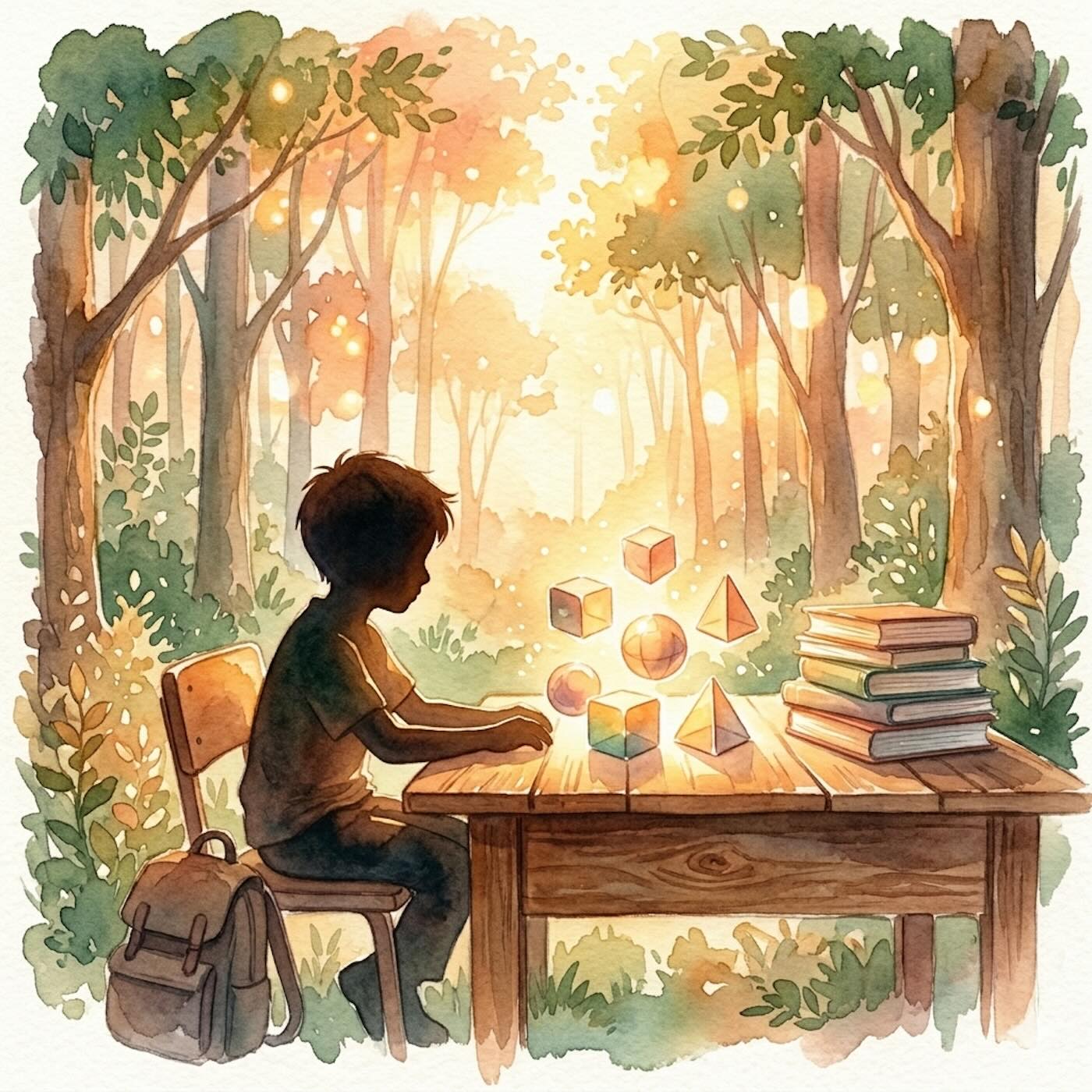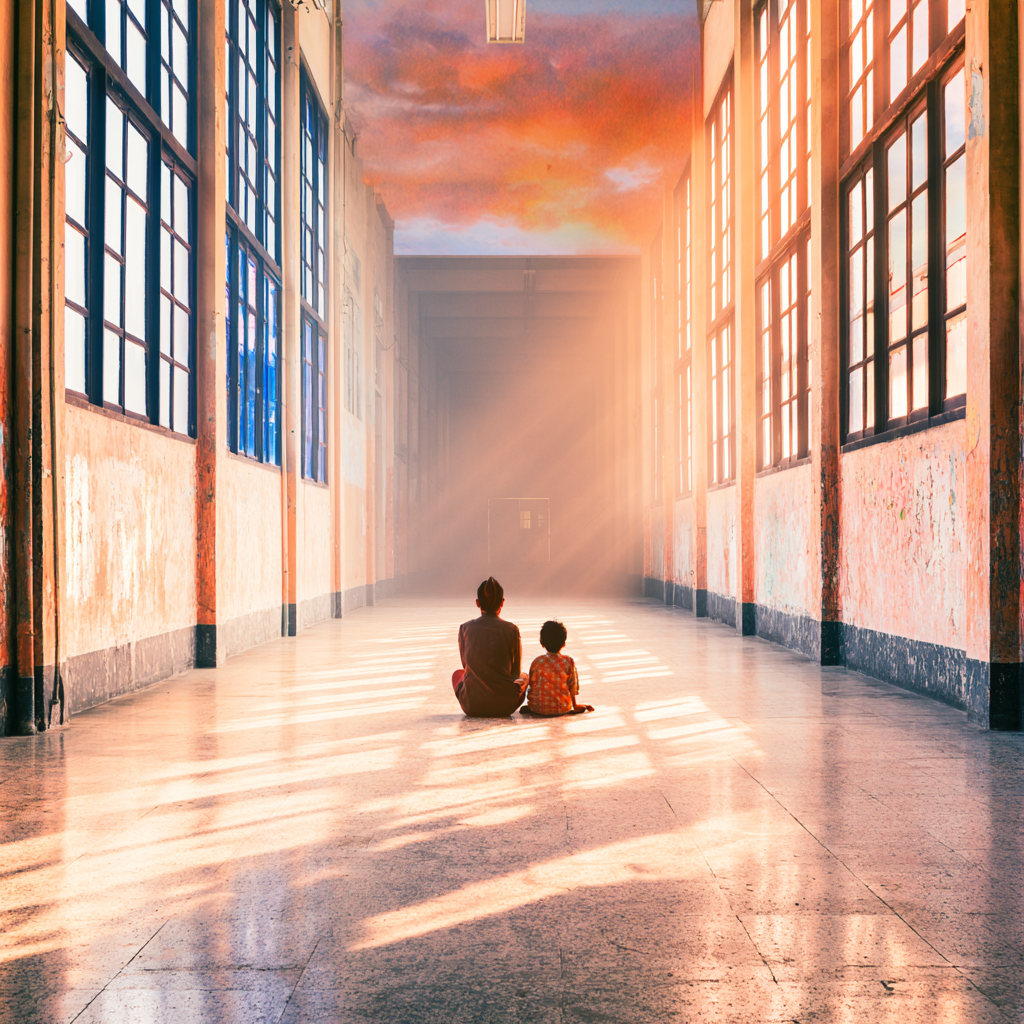
Somewhere in the middle of our latest episode, one of us said it out loud: “the job is to teach them how to be human.”
We weren’t trying to be profound. We were trying to describe something we’ve watched happen to a generation of kids who have grown up staring at screens that have been optimized by billionaires to hold their attention, kids who have arrived in classrooms without their brains having wired the capacities that used to form almost invisibly in childhood: reading a face; sitting with someone who is upset; knowing from the way a voice shifts that something important is happening. These are not soft skills. They are the architecture of a life shared with other people.
A man in his thirties put it as plainly as anyone we’ve heard lately: every time a teenager wants to connect with someone, they’re recorded. A generation of children have spent their lives looking at a screen. They don’t know how to look someone in the eye. We can argue about generalizations all we want, but anyone who has spent real time in schools has watched the devolution of social skills in real time, in real rooms, with real kids who want to belong somewhere and don’t quite know how.
This is where the AI conversation gets interesting to us.
What AI is genuinely good at, and getting better at fast, is the academic machinery. It can differentiate a text for a student who needs a specific reading level. It can build a lesson plan that connects a kid’s passion for Minecraft to the narrative writing standard on their IEP. It can generate an intervention sequence based on what the research says actually works for a student who can’t yet multiply. These are real things that consume real hours of a teacher’s week, and AI can help with them, not because teachers aren’t capable, but because teachers have twenty-five students and one prep period and a pile of concerns that have nothing to do with curriculum design.
If AI can do that work, then what gets freed up?
We ran a small school for years, and one thing we discovered was that you can produce remarkable academic outcomes with a fraction of the time conventionally spent on academic instruction. Forty minutes of structured reading, three times a week, and kids who had been told for years they couldn’t read began reading at levels a decade above where they’d started. But what that finding pointed to was the question: what are we supposed to with the rest of the time?
What we learned was that the rest of the time (six hours, the full day, the years) is supposed to be for the human work. That means helping the children build the capacity to be in a room with other people and navigate what happens there, or finding something they care about enough to push through the hard parts of learning it, or discovering, slowly and with a lot of friction, that they have something to offer the people around them. These lessons cannot be scheduled into a forty-minute block. They accumulate over time, through repeated contact with adults and peers who take the child seriously, who show up tomorrow, and who stay.
AI is clarifying is that educators have spent a very long time treating the academic machinery as if it were the education, as if the curriculum were the point, as if the lesson plan were the thing. But now that a machine can prep the curriculum faster and more precisely than we can, we’re left asking what we are actually for.
And the truth is: we were always there for the human part. Educators just got confused by policies and systems somewhere along the way.
If the next generation of educators finally has the tools to offload the work that pulls them away from their students, will the institutions around them make room for what that school time could become?